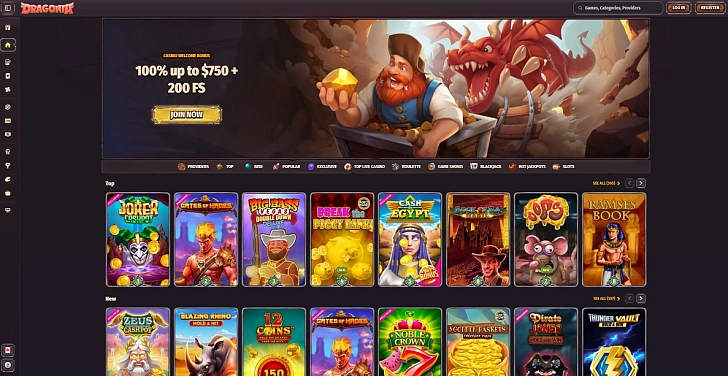

- Pokies at Dragonia Casino: What NZ Players Actually Need to Know Before Spinning
- Why the Collection Doesn’t Feel Like Every Other Casino’s
- The Different Kinds of Pokies, and Why the Difference Matters
- The Studios Worth Knowing By Name
- A Practical Way to Choose What to Play
- RTP and Volatility: Two Numbers That Get Confused Constantly
- Playing on a Phone Instead of a Desktop
- Bonuses, and Why Slots Usually Get the Best Deal
- When a Session Isn’t Going Well
- Keeping It Enjoyable Long Term
Pokies at Dragonia Casino: What NZ Players Actually Need to Know Before Spinning
Ask ten different New Zealanders what a pokie is and you’ll get ten different mental pictures. For some it’s the machine tucked in the corner of a local RSA, still running Cash Cat or Queen of the Nile on a screen that hasn’t been updated since 2011. For others it’s whatever loaded last on their phone at 11pm. Dragonia Casino’s slots section is built to serve both crowds without forcing either one to wade through hundreds of near identical titles just to find something worth their time.
This isn’t a page stuffed with buzzwords about “premium gaming experiences.” It’s a straight rundown of how the collection is organised, which providers actually deliver, how the maths behind RTP and volatility works, and what separates a slot worth your fifteen minutes from one that’s just noise on a screen.
Why the Collection Doesn’t Feel Like Every Other Casino’s
Log into most online casinos and the slots page is a grid. Hundreds of thumbnails, alphabetical or “popularity” sorted, with zero indication of what actually makes one game different from the next. Dragonia’s library is organised by mechanic and theme instead, which sounds like a small thing until you’re trying to find a low volatility fruit machine at 9am on a Tuesday and don’t want to click through forty Egyptian tomb slots to get there.
New titles from studios go live within days of their official release rather than months later, which matters more than it sounds like it should. A slot that launched three weeks ago on Pragmatic Play’s own site and is only now trickling into smaller casinos usually means that operator has a slower content pipeline, which often says something about how the site is run more broadly.
RTP figures are published in each game’s info panel rather than buried in a PDF somewhere. That’s the baseline standard, not a special feature, but it’s surprising how many sites still make you dig for it.
The Different Kinds of Pokies, and Why the Difference Matters
Not all slots are built to do the same job, and treating them like they are is how people end up bored or frustrated within five minutes. Here’s a breakdown of the main categories you’ll run into on the site.
| Slot Type | Reel Structure | What It’s Actually Like to Play | Who It Suits |
|---|---|---|---|
| Classic Pokies | 3 reels, usually 1 to 5 fixed paylines | Fast, simple, minimal bonus interruption | Quick sessions, players who grew up on pub machines |
| Video Slots | 5 reels, 10 to 50 fixed paylines | Bonus rounds, wilds, scatters, free spin triggers | Players who want a story or theme woven through the mechanics |
| Megaways Slots | Variable reel heights, up to 117,649 ways to win | High energy, reels change shape every spin, big swings | Players comfortable with longer losing stretches for bigger upside |
| Cluster Pays | Grid layout, no paylines at all, wins by matching groups | Tumbling wins, chain reactions, visually satisfying | Players who like watching a board clear out rather than lining up symbols |
| Progressive Jackpots | 5 reels, prize pool fed by a percentage of every bet placed globally | Same core game, but one symbol combination pays out the entire pooled jackpot | Players chasing a genuinely life changing single win, understanding it’s rare |
The mechanical difference isn’t cosmetic. A cluster pays slot and a fixed payline video slot can look almost identical on the surface but play completely differently in practice, because the maths engine underneath is calculating wins in a fundamentally different way. Knowing which bucket a game falls into before you load it up saves you from assuming a slot will behave like the last one you played just because the artwork looks similar.
The Studios Worth Knowing By Name
Software providers matter more than most players realise early on. Two slots can have nearly identical themes (there are, genuinely, dozens of Egyptian pyramid slots on the market) and play in completely different ways depending on which studio built the underlying engine. A handful of names come up again and again on Dragonia, for good reason:
- Pragmatic Play built its reputation on high volatility titles like Gates of Olympus and Sweet Bonanza, both of which use a tumbling cluster mechanic and multiplier symbols that stack during bonus rounds. Their output is prolific, roughly two to three new titles a month, which keeps things fresh but also means quality varies more than with smaller studios.
- NetEnt is the studio behind Starburst and Gonzo’s Quest, two games that are over a decade old at this point and still get played constantly because the pacing is genuinely well tuned, not because of nostalgia alone.
- Play’n GO made Book of Dead, which somehow became the unofficial benchmark for the entire “expanding symbol” mechanic that half the industry has since copied.
- Hacksaw Gaming leans into unconventional bonus structures, games like Wanted Dead or a Wild that don’t follow the standard free spins formula, which makes them worth trying if you’ve grown tired of every bonus round looking the same.
- Big Time Gaming invented the Megaways mechanic and still licenses it to other studios, meaning any Megaways slot you play, regardless of who built it, ultimately traces its DNA back to this one company.
- Push Gaming is smaller than the others on this list but has built a reputation among more experienced players for tightly balanced math models, meaning the stated RTP tends to match actual play experience more consistently.
Having this spread of providers rather than leaning on one or two big names is what keeps the library from feeling stale after a few months of regular play.
A Practical Way to Choose What to Play
Scrolling until something looks appealing is fine occasionally, but it’s not a great long term strategy if you actually want your sessions to be enjoyable rather than a coin flip on whether you picked a dud. A more deliberate approach looks something like this:
- Work out how long you’re actually playing for first. Fifteen minutes on a break calls for something with a fast base game and minimal bonus interruption, a classic three reel slot or a simple five reel video slot. A proper evening session with time to spare is where megaways or cluster pays titles make more sense, since their bonus features need room to actually develop.
- Check the RTP before loading the game, not after. Anything sitting at 96% or above is generally solid by industry standards. Below 94% and you’re playing a game that’s mathematically stacked more heavily against you than most alternatives, which is fine occasionally but not something to build a regular habit around.
- Look at the volatility rating if the provider lists one. This tells you more about what a session will feel like than RTP does. Low volatility means smoother, more frequent smaller wins. High volatility means you could sit through fifty spins with nothing, then hit something substantial on the fifty first.
- Run the demo mode first if the title offers one. This is the single most underused tool available to players. Ten minutes in demo mode tells you how often bonus features trigger, how the pacing feels, and whether the game is actually fun before a single dollar is at risk.
- Decide your budget before you start, not while you’re playing. Treat it the same way you’d treat the cost of a night out, an amount you’re comfortable spending on entertainment, full stop. Deciding this mid session tends to lead to chasing losses, which rarely ends well.
None of this guarantees a winning session, because nothing can. What it does is stop you from wasting time on games that were never going to suit what you actually wanted out of the session in the first place.
RTP and Volatility: Two Numbers That Get Confused Constantly
These terms get used almost interchangeably by people who haven’t looked into what they actually mean, and that confusion causes real problems, mostly in the form of unrealistic expectations. They measure completely different things.
| Metric | What It Actually Measures | What It Doesn’t Tell You |
|---|---|---|
| RTP (Return to Player) | The percentage of all money wagered on a slot that’s returned to players, calculated across tens of millions of spins | Anything about your specific session. A 97% RTP slot can still lose money for two hours straight |
| Low Volatility | Wins land often but tend to be small relative to the stake | Whether the game will feel exciting. Low volatility often means steady but unremarkable |
| Medium Volatility | A mix of frequency and size, the middle ground most slots default to | Exact win frequency, this varies quite a bit even within the “medium” label |
| High Volatility | Wins are rare, but when they land they can be considerably larger, sometimes hundreds of times the stake | How long you’ll wait between wins. Could be ten spins, could be two hundred |
RTP is a long run average, not a promise about what happens in the next hour of play. This is worth repeating because it’s the single most misunderstood concept in online gaming. A game advertised at 96.5% RTP has, over its full theoretical lifespan across every player who’s ever spun it, paid back 96.5 cents of every dollar wagered. That says nothing about whether your Tuesday night session lands on the winning or losing side of that average, because individual sessions are a tiny fraction of the sample size the number is calculated from.
Playing on a Phone Instead of a Desktop
Most sessions on Dragonia now happen on mobile, which shaped how the slots section was built rather than being an afterthought bolted on later. Games run directly in the mobile browser, no app store download required, and the interface reflows depending on whether you’re holding the phone upright or turned sideways. Loading times hold up reasonably well even on a patchy 4G connection, since the games are built with mobile constraints in mind rather than being a shrunk down desktop version with oversized assets that take forever to load.
One thing worth knowing: some older or lower budget slot titles genuinely play worse on mobile, buttons positioned awkwardly, text too small to read comfortably, animations that stutter on older phones. If a game feels clunky on your device, it’s often not your connection, it’s the game itself. Trying the demo version first (see the list above) catches this before it becomes annoying mid session.
Bonuses, and Why Slots Usually Get the Best Deal
Slots are typically the main beneficiaries of welcome offers and ongoing promotions, and there’s a practical reason for that beyond marketing. Most bonus terms count slot wagers at 100% toward the playthrough requirement, whereas table games like blackjack or roulette are often weighted at only 10% to 20%, sometimes even lower for certain baccarat variants. In plain terms, if you’re planning to clear a bonus, playing pokies gets you there far faster than splitting your time across table games.
Free spins tied to specific featured titles rotate regularly and tend to line up with new releases, so it’s worth a quick check of the promotions page before settling on a game for the session, particularly if you were planning to play that title anyway.
Two things worth checking before opting into any bonus:
- The maximum bet allowed while a bonus balance is active. Exceeding it, even by accident, can void winnings on some platforms, so this is worth reading rather than skimming past.
- Whether specific games are excluded from contributing to wagering. Higher RTP titles are sometimes excluded precisely because they’d let players clear the bonus too easily, which is standard industry practice rather than anything unusual to Dragonia specifically.
When a Session Isn’t Going Well
Every regular player has had a stretch where nothing lands, the bonus rounds refuse to trigger, and the whole thing stops being fun somewhere around spin two hundred. A few things are worth trying before assuming the game itself is broken:
Switching to a lower stake size doesn’t change your odds of winning, but it does stretch your session out longer for the same budget, which sometimes is enough to ride out a cold patch. Switching games entirely is often more effective than switching stakes, since you’re moving away from whatever specific volatility curve you happened to land on the wrong side of. And sometimes the actual answer is just stopping. There’s no mechanical reason a slot “owes” you a win after a losing streak, and that’s not how random number generators work regardless of how it might feel in the moment.
Keeping It Enjoyable Long Term
Pokies are entertainment, not an income source, and the players who get the most out of them long term tend to be the ones who treat them that way from the start. Deciding on a budget before playing, stopping when a session stops being fun rather than when the money runs out, and taking regular breaks are simple habits, none of them complicated, but consistently the difference between people who look back on their gaming positively and people who don’t.
If gambling ever starts feeling like more stress than entertainment, the New Zealand Gambling Helpline offers free, confidential support, and reaching out early tends to make a bigger difference than waiting until things feel unmanageable.

Available Bonuses October 2026